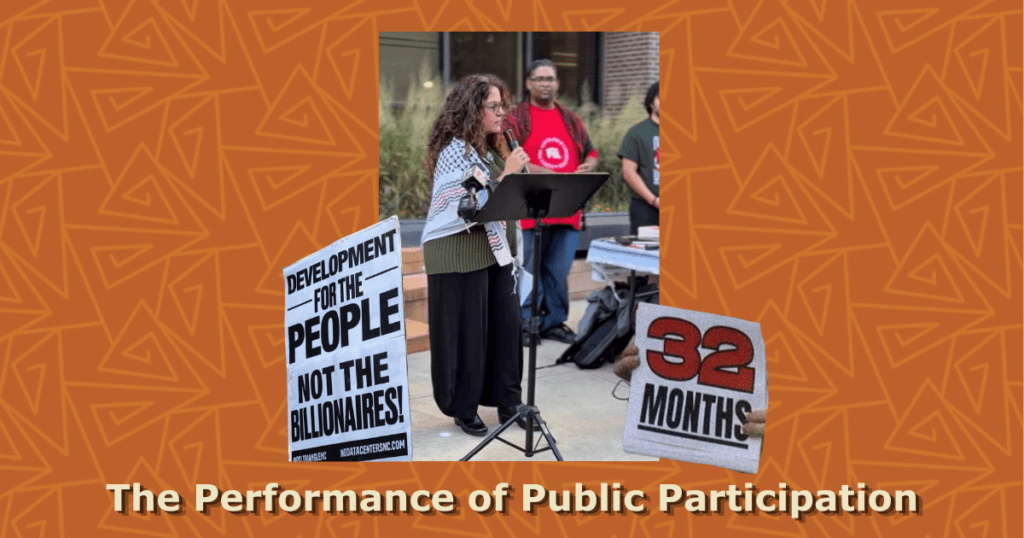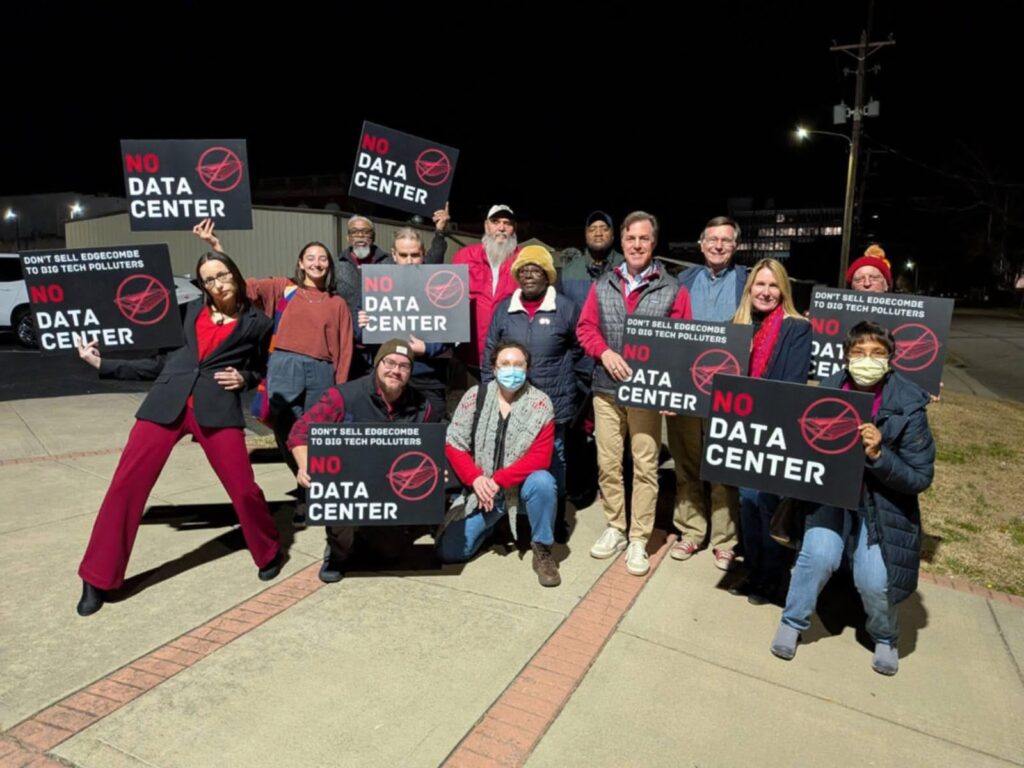
Hello! My name is Joanna, aka Jo. I live in rural Martin County in northeastern NC. I am an organizer with the Edgecombe Neighbors for Data Center Accountability (ENDCA) based “next door” in Tarboro and Rocky Mount. I’m interning with NCEJN, supporting the data center network. I was asked to share a field report slash reflection on what I’ve learned so far through organizing with ENDCA. I’m going to attempt a recap and roundup of how we organized and won some cool victories. I’m speaking from my own experience, and not on behalf of the group.
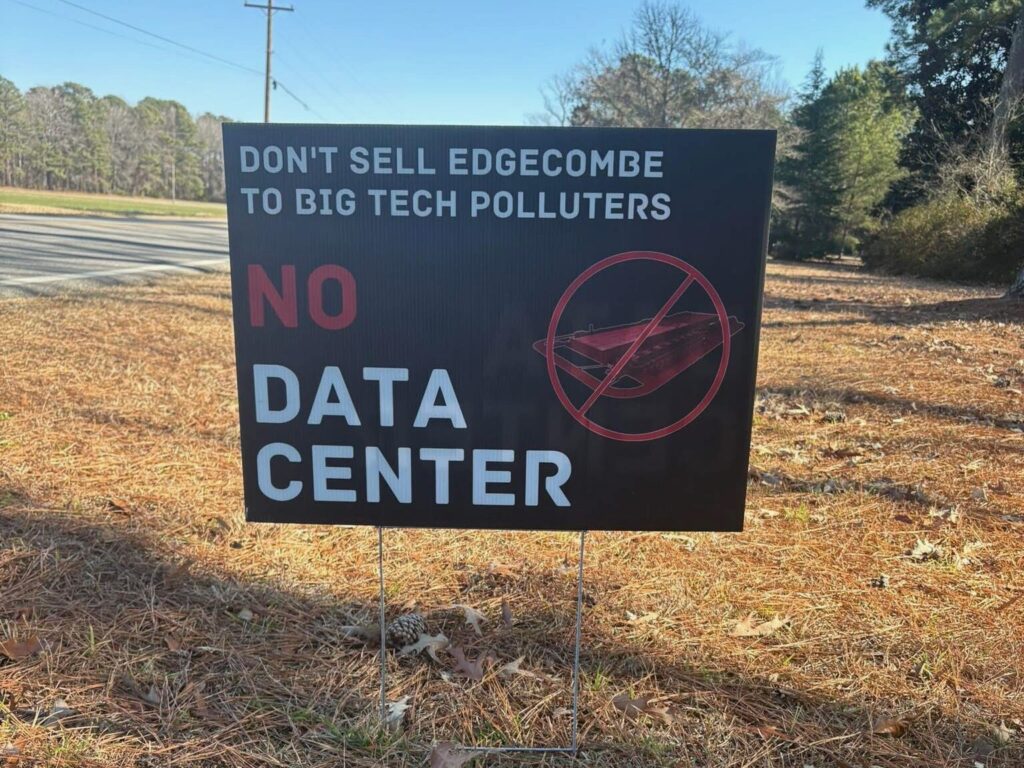
If you don’t know, Edgecombe County just passed a two-year moratorium on data centers in August. Yeehaw! This was the outcome of two waves of community engagement, first in August 2025 in the Town of Tarboro against a data center developer applying for a special use permit, then in November 2025 against that same developer proposing to purchase Edgecombe County land for another data center in Rocky Mount’s historically Black Kingsboro/Bulluck community.
In the spring of 2026, Edgecombe County Manager Eric Evans launched a Data Center Advisory Group, and seven members of ENDCA were appointed to the group. Their final recommendations to the county were to ban data centers in Edgecombe, but due to the legal grey area of the downzoning law, the county instead proposed a moratorium, which passed. Though the Tarboro special permit is still stuck in legal limbo, the developer withdrew their offer on the Kingsboro site.
Two years is a big win. I think we’ve got the second longest moratorium behind Northampton, and while it can be ended early at any time – all of these moratoriums don’t guarantee protections for the full duration – we have a strong path forward for engaging with our local government to put more regulatory measures in place to protect the community from harmful development, pollution, and emerging tech industry land grabs. But we still have a long way to go.
Which factors influenced Edgecombe Neighbors’ success up until now?
Historical legacy of “We Can Do Better”
First, our group built off of a long legacy of the Kingsboro community fighting against harmful development. The Citizens for Responsible Zoning organized in the 1990s to fight an industrial hog processing facility that was trying to come to Kingsboro. Many of the folks who organized then, also organized against the data center. It has been both inspiring and sobering for me as a younger person to learn about this fight (highly recommend you watch the half-hour documentary ECU did on the group) and see people having to fight again for the same neighborhood 30 years later. Here is a great article by longtime organizer Jim Wrenn on Rocky Mount as the front line in the struggle for Black political power in NC today.
Preexisting community groups, strong early partnerships
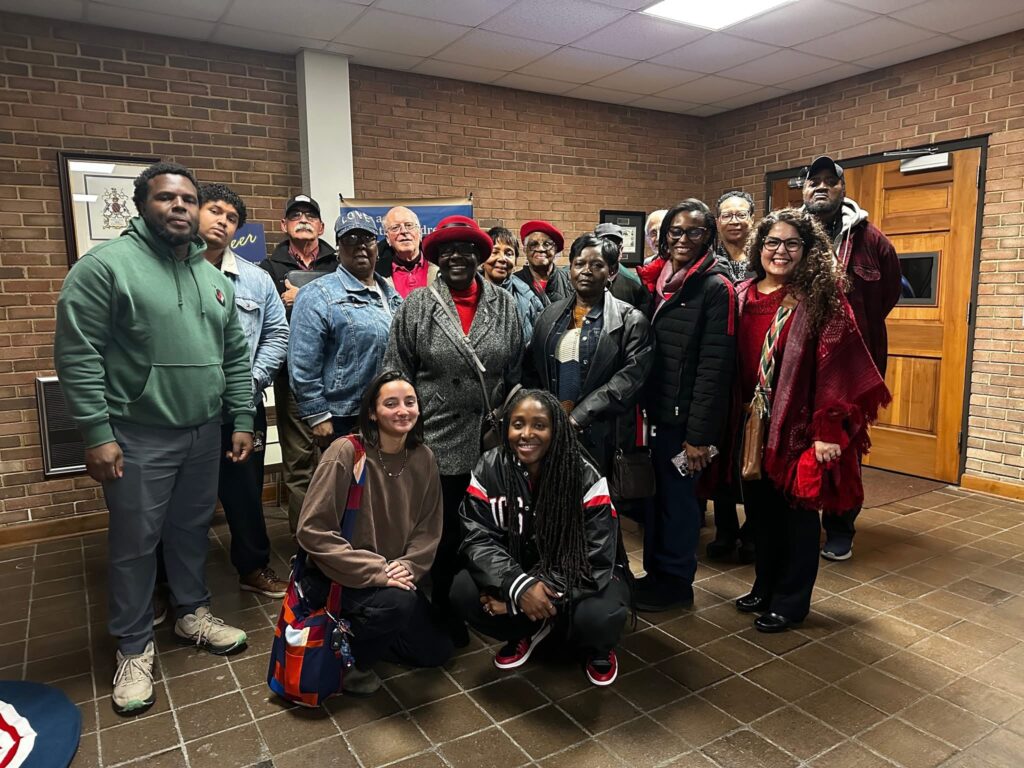
Because of this expertise and experience represented in our group leadership, we weren’t organizing from scratch. Jim pulled us all together on an email chain with Dr. Rania Masri at NCEJN and we were off to the races with plans for a town hall and a petition to stop the Kingsboro sale. There was already strong infrastructure in place among local Democratic precinct chairs, especially Janice D. Bulluck, Kim Lyons and Melanie Goff Bradley, who streamlined mobilizing people in Kingsboro and across the county. Our group co-chairs Janice D. Bulluck and Kevin Wilson dedicated so much of their time to building out the group and getting people plugged in early on.
Our relationships with NCEJN and Sound Rivers helped us with credibility and strategic support, as well as media attention. Pamlico-Tar Riverkeeper Katey Zimmerman has been an especially valuable advocate and partner. In an awesome turn of events, I was also able to roll up my work with ENDCA into an internship with NCEJN for my field practicum hours for my master’s in social work at UNC-Chapel Hill specializing in community management and policy practice, which has allowed me to do this community organizing for school credit.
Clueless developer
Lastly, it bears mentioning that a factor that influenced our success was the incompetence of the developer we were opposing, NC-based Energy Storage Solutions. They haven’t built AI data centers before. Their proposal was a 3-page greenwashed mess. They showed poor business sense in a twin proposal in Fayetteville and lost their bid there. They were struggling to line up investors. We were very fortunate to be facing such an inexperienced opponent, as opposed to communities like Richmond or Stokes or Lee Counties fighting Big Tech villains like Amazon, Meta, and the rest. That was just plain lucky.
Now, we will use the moratorium period to push for regulations that prevent those villains from coming here next.
Which tactics worked best for us?
Consistent presence at county meetings
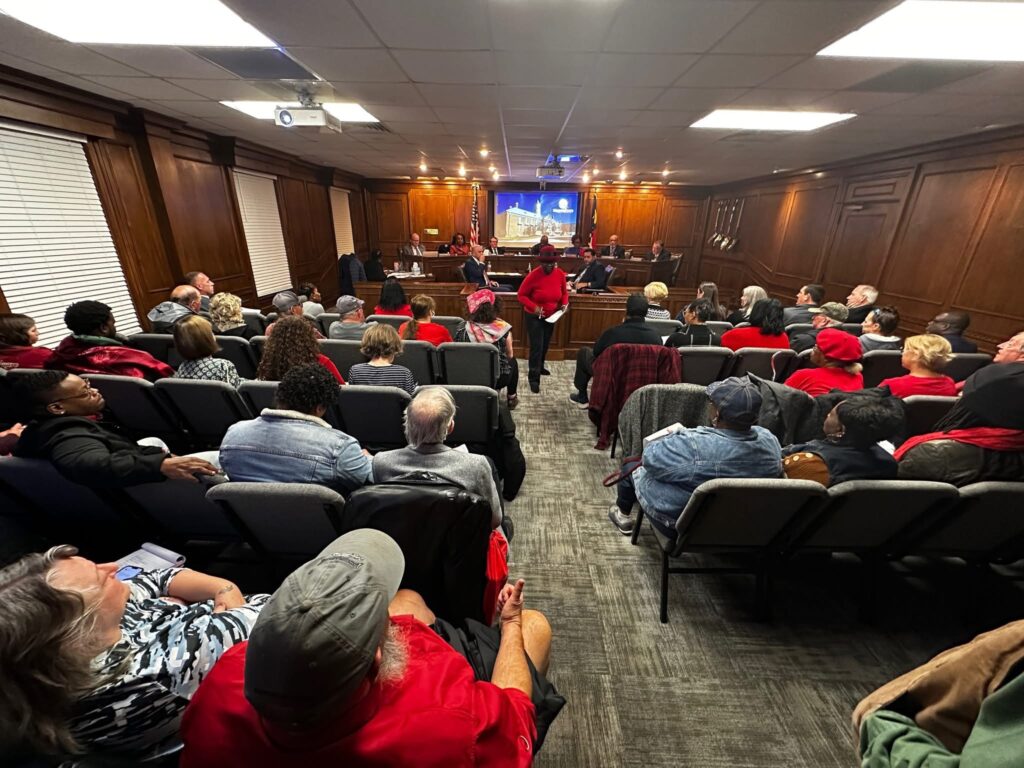
We never stopped showing up at county commissioner meetings, and this earned us respect with the chairman of the board and several commissioners. We wore red and spoke during public comment, every single month, and won’t stop until we win the protections we demand. Marquetta Dickens and Owen Ellis are two voices that I think stood out as talented public speakers during public comments who also have a lot of ears listening to them on social media, who used their platforms well to get people fired up. Passionate local elected officials like Kendrick Ransome of Pinetops and Briyana Baker of Conetoe were advocates for accountability and protections from the beginning, influential in their town’s ultimate resolutions against data centers.
Passing town resolutions
Among many other contributions, Jim Wrenn, Mavis Stith, and others focused on educating other local municipal leaders, and got a majority of towns in Edgecombe to pass resolutions against data center development, strengthening our case with the county. I think the town resolutions were a powerful piece of community engagement and political strategy that I haven’t seen other NC groups use as much, and I definitely recommend it as a creative way to build grassroots support. View the town resolutions here.
Electoral engagement
David Batts, a resident of Kingsboro who had fought against the hog facility, ran for Edgecombe County’s District 6 and won the primary against pro-data center Donald Boswell as well as won the general election against a write-in candidate. Mr. Batts spoke at the data center panel at the Summit in October. We are eager to support him in his work when he is commissioner. His wife Robin Batts and sister Hazel Batts are two crucial elements of his campaign’s success.
There are many other names to mention that I can’t cram in – like Renee Anderson, Ray Hart, Liz Kaye Jones, Kim Koo, and my off-site MSW supervisor Jay Jahnes who meets with me every week to discuss organizing challenges – hopefully I haven’t missed too many. Media masters like Frederick Murphy from History Before Us and John McCann with the NC Black Alliance went above and beyond to capture our story and get us media attention, and we got attentive coverage from local press as well. I am sure I will remember a name at 3am and feel mortified that I missed mentioning them…We are a big group. Know that there are many of us, and that everyone named and unnamed played vital roles!
What do I wish we had done differently?
Ongoing member engagement and workload distribution
One thing we’re still working on is using subcommittees to distribute work and keep members engaged. We launched subcommittees earlier this year to focus on areas such as Fact Finding and Alternative Solutions, but they didn’t catch on as strongly as I would’ve liked to see. Part of this was just due to how quickly all of the moving parts evolved (the county Advisory Group, news about new AI horrors every day, the data center industry itself, figuring out what our demands were and whether they were feasible) and the other part was that I think we rushed the concept. Dedicated separate meetings for each subgroup would have been a good follow-up, but we didn’t do that.
Currently, our group structure is a tight core group via text thread, a consistent wider group that attends our monthly meetings and county meetings, and a wider email list of folks who engage when they are able. I would love to see these concentric circles turn into “snowflakes,” (see page 7 of this Marshall Ganz guide to see what I mean) and see more people step up to own a small piece of the work, especially now that our moratorium is in place and we’ve bought ourselves some time to reorganize and perhaps do more at a regional and state level.
Confirm the facts before putting numbers on flyers
Get the numbers right, or it can erode trust with officials and press. I wrote our initial press release announcing the petition and the town hall back in November. At the time, the dollar amount attached to the project was not in public documents, and had only been mentioned in some data center industry press as $19.2 billion, citing the developer’s boasts (we later learned) incorrectly, later the Kingsboro project was revealed to be around $6 billion instead. It’s a mistake that’s hard to undo once it gets posted everywhere online. I wish I had been more cautious republishing that claim, because in an industry that lies to us every way they can, the truth is one of our most valuable assets.
Prioritize getting people’s email addresses
One last tip: We used Moveon to host our online petition, but the platform doesn’t allow us access behind the scenes to anyone’s email address. Any emails we wanted to send to petition signers had to be sent via the Moveon platform and approved by their staff, and sometimes took days to send through. I cannot recommend enough that organizers use a petition service that allows access to signers’ email addresses so you can organize people more effectively, such as by zip code.
How have I changed personally through this experience?
I remember meeting Ms. Janice D. Bulluck on the phone for the first time back in November. We both said, essentially, “I’ve never done something like this before!” I think I might have even said, “I’m not a community organizer.” Well, that probably wasn’t true then, but it definitely isn’t true anymore now.
I am so proud to have met and learned from so many experienced organizers in this past year. It has given my weary spirit a lot of hope that ordinary people have immense power to change the world, if we group up in big enough numbers, get united on a goal, and stay consistent. Honestly, what can’t we do, y’all?
Please email me at rutterjoanna@gmail.com to connect, especially if you want to chat about post-data center moratorium organizing. I like meeting people doing this work, and helping people get connected to resources. You can also visit endca.org to get in touch with our group.