Debra Goldberg, Greenfield Resident
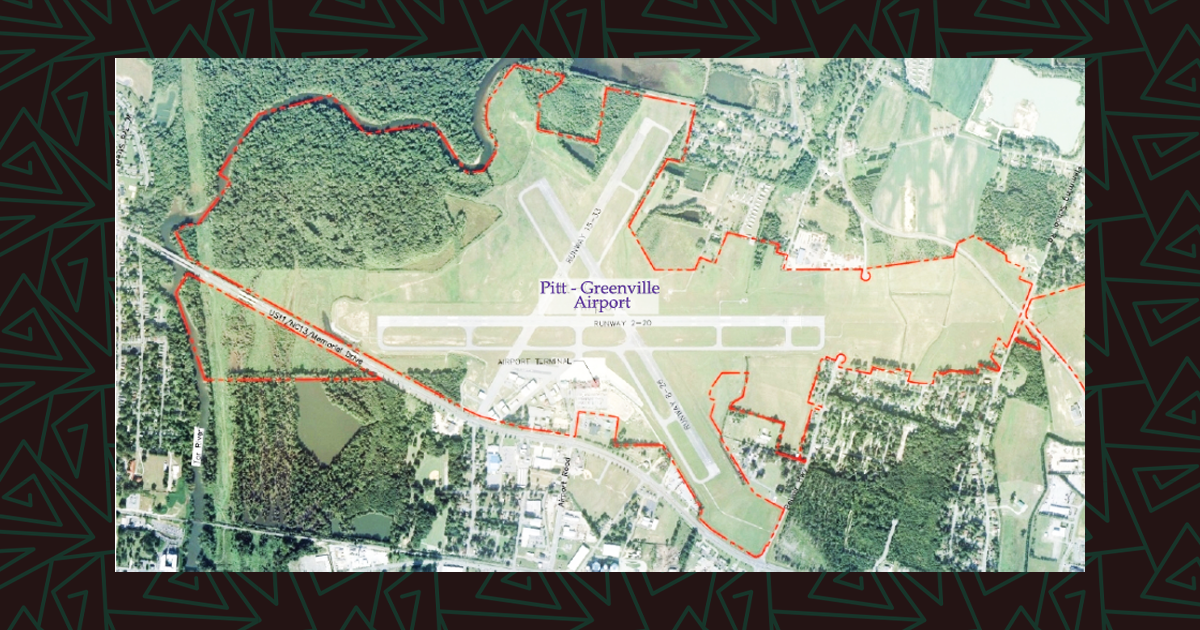
I am a resident of Greenfield, a community located less than a quarter mile from Pitt/Greenville Airport. I can walk to the runway in under five minutes. That is not a metaphor. That is my reality, and the reality of my neighbors.
I stand before you today not just as an individual, but as a member of a BIPOC community that is tired. We are exhausted. Year after year, we show up to rooms like this one not to ask for new businesses, not to ask for the pharmacy we desperately need on this side of town; but simply to defend our right to breathe.
Historically, BIPOC communities, (Black, Indigenous, and People of Color), have been targeted, time and again, as acceptable sites for everything that more affluent and established communities refuse to absorb. North of the river has been continually identified as the ideal place to build everything except what we actually need. We have pharmaceutical plants. We have manufacturing facilities. We have the airport itself. And now, you want to add hangars.
This is not progress for us. This is a pattern. Scholar and activist, Nick Estes, in his book “Our History Is the Future”, documents how systemic policies have long been used to make wrong appear right — how environmental and safety assessments are crafted not to protect people, but to provide legal cover for decisions that have already been made. We watched it happen with the Dakota Access Pipeline, where the health, land, and sovereignty of Indigenous people were bulldozed — literally — in the name of capital gains. The assessments said it was safe. The people who lived there said otherwise. We know how that story ended. We are not naive. We know how these processes work and we are asking this body to decide differently.
Research has confirmed for years that aircraft exhaust contains ultrafine particles that are deeply harmful to human health and that airport pollution spreads far beyond what most people assume, reaching residential areas where families live, sleep, and raise their children, often completely unaware of the risk. A proposed tree line does not change that. Greenery does not filter ultrafine particles out of the lungs of a senior citizen or a child.
I have spoken with neighbors here in Greenfield who have watched loved ones die of cancers and other illnesses. These are people who spent their entire lives in this community. I have to ask this body: at what point does that matter more than the promise of capital gains?
Consider Cancer Alley, an 85-mile stretch along the Mississippi River in Louisiana, where over 150 petrochemical plants have been built alongside predominantly Black communities. Residents there have some of the highest cancer rates in the nation. They fought. They testified. They buried their neighbors. And the plants kept coming. That is what happens when decision-makers consistently choose industry over people. We are not there yet. But we recognize the road.
We are not against economic development. We are against economic development extracted from communities that have already given more than their share – seniors, families, people who have called this place home for generations, who deserve real investment, not another facility that serves everyone except them.
We deserve better than to keep showing up asking for the bare minimum: our health, our air, our lives.
I urge this body to vote no.
Thank you.