Kayan Cheung-Miaw (she/they | ella/elle), Inclusive Economies Project Director, United for a Fair Economy
The NC General Assembly is trying to push four constitutional amendments that would impact NC for generations to come. If passed through NCGA, they will be on the ballot this November for voters to vote on. These policies overwhelmingly benefit the wealthiest 1% and corporations, while putting a strain on working people and our state, and our ability to change our own working and living conditions. It is more efficient to stop these amendments now, rather than spend time and money associated with an election fight.
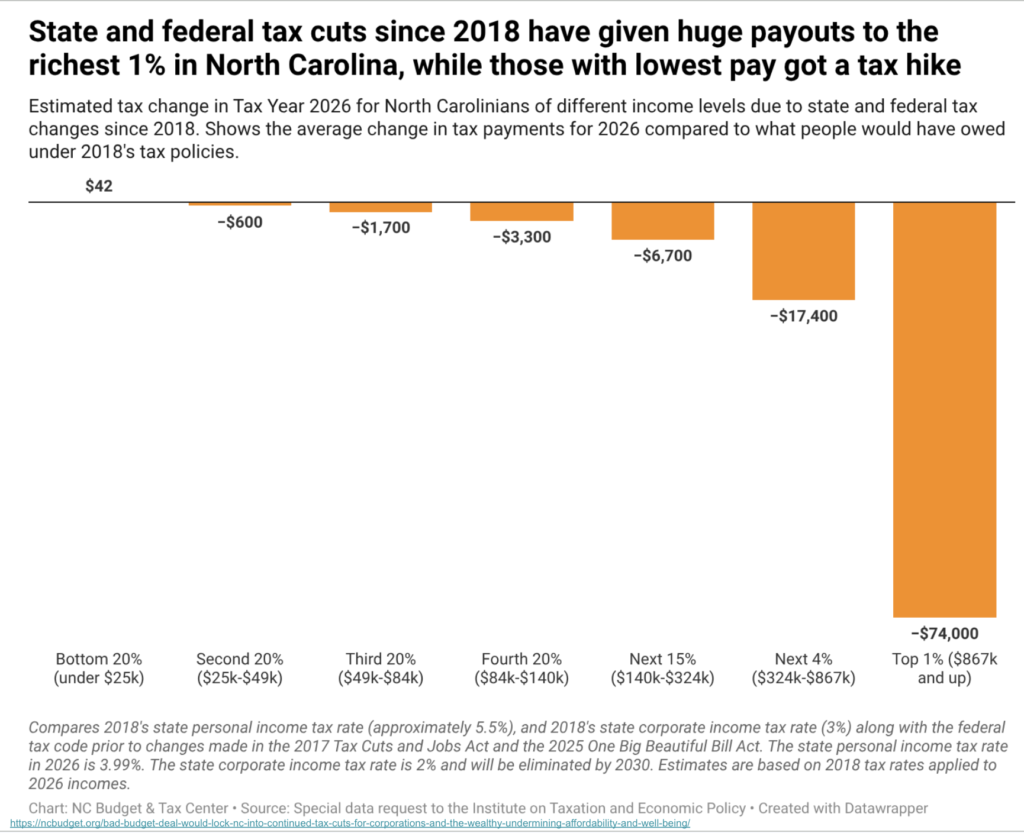
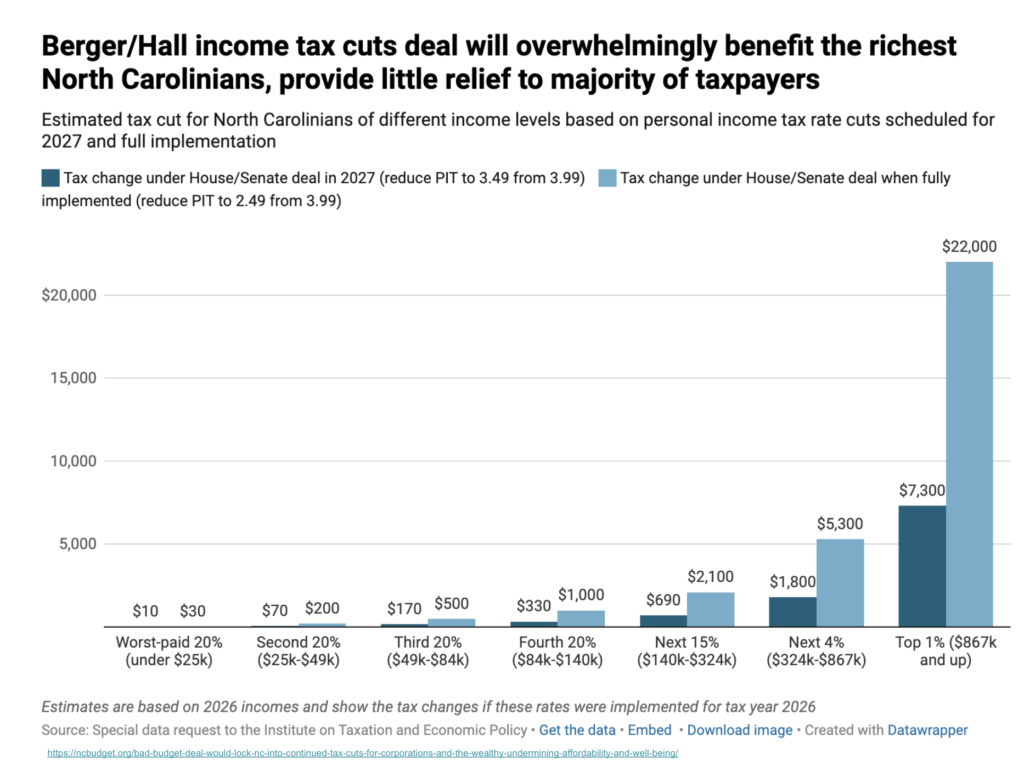
The budget “deal” looks great on the surface, with raises for teachers and state workers. But will those teachers and workers have jobs to return to when more schools will close, and state revenue continues to be depleted? When we continue to give tax cuts to the wealthiest 1% at the expense of everyone else?
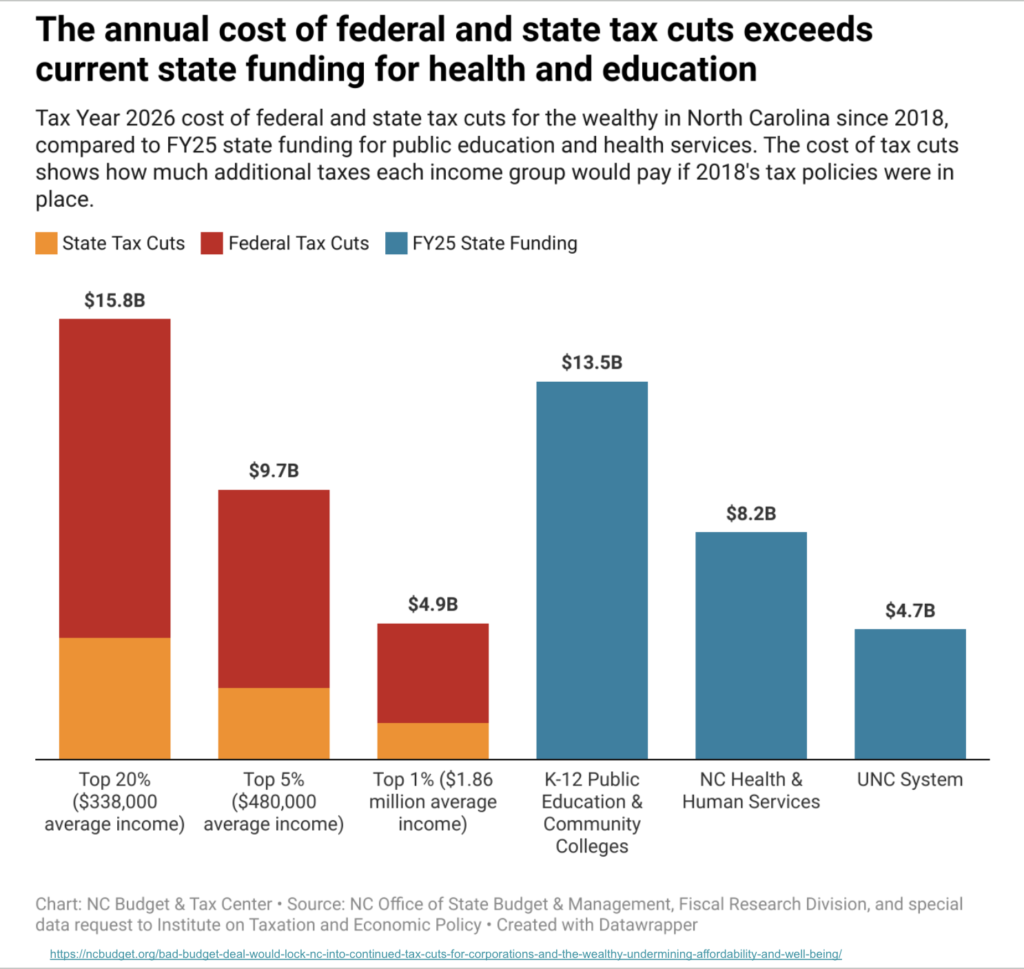
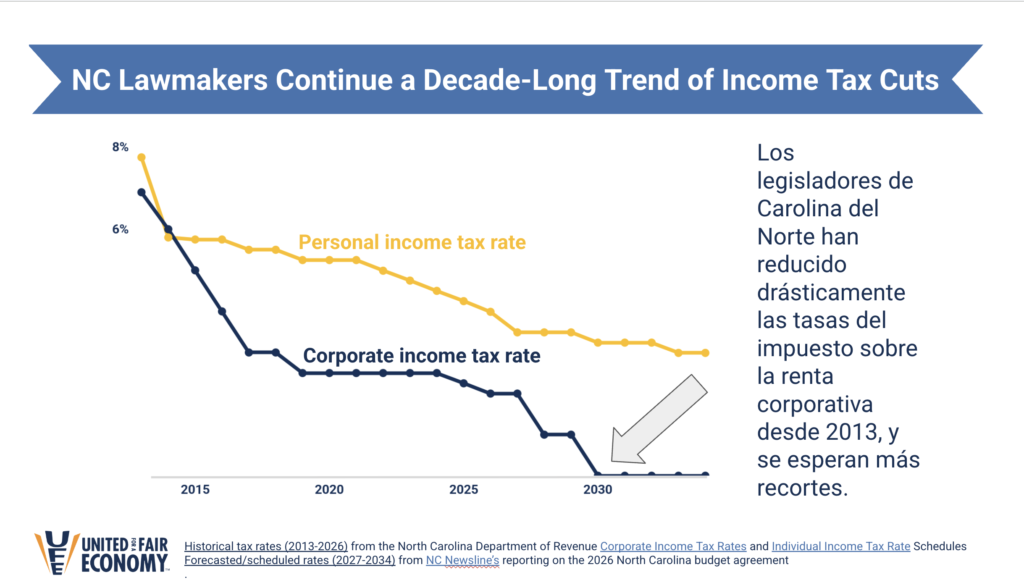
- Bad budget deal would lock NC into continued tax cuts for corporations and the wealthy, undermining affordability and well-being
- Constitutional amendments will lock North Carolina into chronic underfunding at multiple levels of government
- Tax cuts skew to the rich and will increase income inequality
- Take action: The income tax cap amendment bill is headed to the Senate Finance Committee tomorrow. Take action today by contacting a member of that committee and telling them to vote no on SB 1080 and stop all automatic income tax cuts that are leaving the people and economy of our state worse off.
- Learn more: Monday, June 1, at 6:30 PM, for The People’s Hearing on Funding the Public Education Every Child Deserves. Register here for Zoom link and share with your networks
- A vague proposed constitutional amendment moving through the legislature would limit how local governments can use property taxes — the primary way communities fund schools, emergency services, infrastructure, and more.
- Limiting this funding will not make housing more affordable. It will make it harder for communities to keep up with rising costs and growing needs.
- And when revenue is restricted, those costs don’t disappear — they shift onto families through reduced services, higher fees, and greater financial strain.
- Lawmakers should focus on targeted solutions that help seniors and families with low incomes stay in their homes — not across-the-board limits that weaken local communities.
- Take Action: contact lawmakers re: Property tax cap puts NC communities at risk
- This afternoon the Senate Ag committee is going to consider a bill to amend the constitution to add a right to work provision. If it passes, the whole Senate will vote on it on Tuesday at 11 and then potentially the whole House on Wednesday.
- We would love to have a big turnout for the vote in the Senate Tuesday and House Wednesday (more info forthcoming from NC Justice Center: Clermont@ncjustice.org)
- Vote against the proposed right to work constitutional amendment, S 1082. Right to work laws increase economic inequality, reduce bargaining power, and shift more income and influence toward corporations and away from people.
- “Right to work” laws make it illegal for a group of unionized workers to negotiate a contract that requires all employees who benefit from the contract terms and union representation to pay their share of the costs of administering it. The effect is to dilute union bargaining strength by making it more difficult for unions to financially sustain themselves, since unions represent everyone in the bargaining unit, even those who choose not to pay membership dues. As a result, the laws impact workers’ wages and benefits as well as local economies.
- RTW is already the law in North Carolina and has been since 1947. There is no justification for going through the expensive process of adding it to the constitution now, after nearly 80 years.
- Workers in RTW states earn lower pay on average—about 3.2% less, or roughly $1,670 less per year for a full-time worker compared to similar workers in non-RTW states. RTW laws are also linked to higher workplace fatality rates and reduced access to health insurance and retirement benefits.
- Further limit communities’ ability to sue hog farms and other agricultural operations
In Solidarity,
Kayan Cheung-Miaw (she/they | ella/elle)
Inclusive Economies Project Director